
Respiratory Protection: Breathing Safety at Workplace
Respiratory protection is essential at the workplaces where there is generation of dust, mist, gas and vapors, contaminated air which generates during various operations. Use respiratory equipment wherever it is necessary to prevent lung diseases
Ganpat Shinde
12/23/20252 min read
Respiratory protection is a critical part of workplace safety, especially in environments where workers are exposed to harmful dust, fumes, gases, vapors, or oxygen-deficient atmospheres. Proper respiratory protection helps prevent serious occupational diseases and ensures workers can breathe safely while performing their tasks.
What is Respiratory Protection?
Respiratory protection involves the use of devices designed to protect the respiratory system from inhaling hazardous substances present in the air. These devices filter contaminants or supply clean air to the user, depending on the level of hazard.
Why is Respiratory Protection Important?
Exposure to airborne hazards can lead to severe health problems such as:
Respiratory diseases (silicosis, asbestosis, pneumoconiosis, asthma)
Lung infections and long-term lung damage
Poisoning due to toxic gases or vapors
Reduced oxygen intake leading to unconsciousness or death
Using proper respiratory protection significantly reduces these risks and ensures compliance with safety regulations.
Common Workplace Respiratory Hazards
Dust (cement, silica, coal, wood)
Fumes (welding fumes, metal fumes)
Gases (carbon monoxide, chlorine, ammonia)
Vapors (solvents, paints, chemicals)
Smoke and mist
Oxygen-deficient environments (confined spaces)
Types of Respiratory Protective Equipment (RPE)
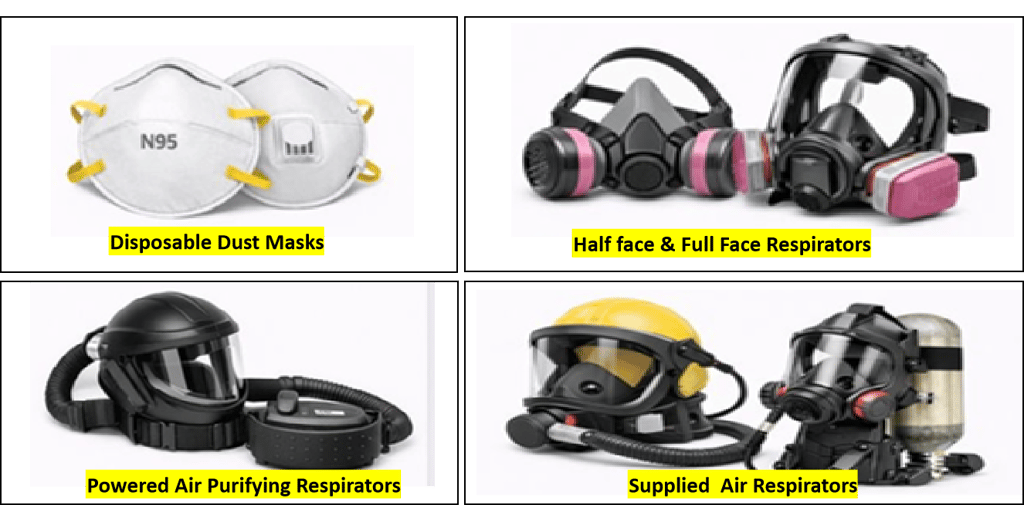
1. Disposable Dust Masks
Used for protection against non-toxic dust and particles
Common examples: N95, P95 masks
Suitable for construction, grinding and cleaning work
2. Half-Face and Full-Face Respirators
Equipped with replaceable filter cartridges
Protect against gases, vapors, and particulates
Full-face respirators also protect eyes and face
3. Powered Air - Purifying Respirators (PAPR)
Use a battery-powered blower to supply filtered air
Provide higher protection and comfort for long-duration work
4. Supplied - Air Respirators (SAR) and SCBA
Provide clean air from an external source or air cylinder
Used in highly toxic or oxygen-deficient environments
Essential for confined space entry and emergency response
Proper Selection of Respiratory Protection
Selecting the right respirator depends on:
Type and concentration of airborne hazard
Oxygen level in the work environment
Duration of exposure
Worker comfort and fit
Applicable safety standards and regulations
A hazard assessment must always be conducted before selecting respiratory equipment.
Correct Use and Fit
Ensure proper fit testing before use
Check face seal and straps before each use
Facial hair can affect the seal and reduce effectiveness
Follow manufacturer instructions strictly
Maintenance and Care
Clean and disinfect reusable respirators after use
Replace filters and cartridges as recommended
Store respirators in clean, dry and sealed containers
Inspect respirators regularly for damage
Training and Awareness
Workers must be trained on:
When respiratory protection is required
Correct method of wearing and removing respirators
Limitations of respirators
Emergency procedures
Conclusion
Respiratory protection is not optional -- it is a life-saving safety measure. Employers must provide suitable respiratory equipment and workers must use it correctly. By ensuring proper selection, fit, training and maintenance, organizations can protect workers’ health and create a safer work environment.
Remember: Clean air is essential for life. Protect your breath, protect your future.