
Earthquake Disaster: Safety precautions before, during and after an earthquake
Earthquakes occur due to sudden movement of tectonic plates beneath the earth's surface and may be followed by aftershocks. Last week several strong earthquakes were recorded around the world. Here is the blog which elaborate about safety measures to be taken before, during and after earthquake natural disasters.
Ganpat Shinde
6/28/20263 min read
Introduction
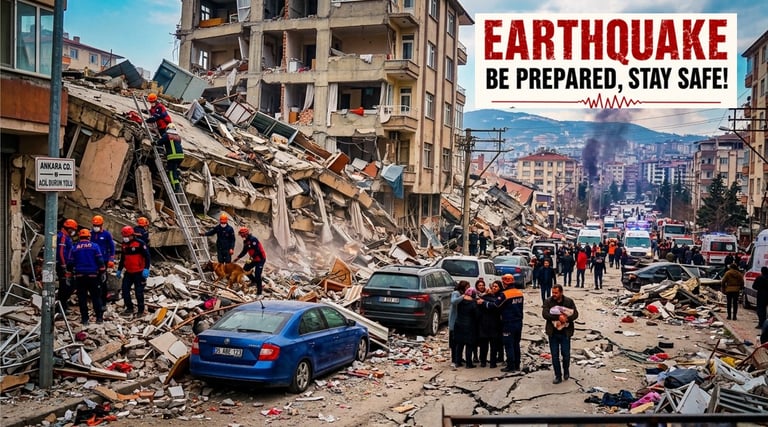
Earthquakes are among the most sudden and destructive natural disasters. They occur when the Earth's tectonic plates move, releasing energy that causes the ground to shake. While earthquakes cannot be prevented or predicted accurately, their impact can be significantly reduced through proper preparedness, awareness, and timely action.
Every year, earthquakes cause loss of life, injuries, and extensive damage to buildings, infrastructure, and essential services. Knowing what to do before, during, and after an earthquake can save lives and minimize injuries.
What is an Earthquake?
An earthquake is the sudden shaking of the Earth's surface caused by the movement of rocks beneath the ground. These movements release seismic waves that can range from mild tremors to severe shaking capable of collapsing buildings and triggering landslides, fires, or tsunamis.
Common Hazards During an Earthquake
Collapse of buildings and structures
Falling furniture and household objects
Broken glass and flying debris
Fire due to damaged gas lines or electrical faults
Landslides in hilly regions
Liquefaction in soft soil areas
Tsunamis in coastal regions
Power outages and communication disruptions
Safety Precautions Before an Earthquake
Being prepared is the best defense against earthquakes.
At Home
Secure heavy furniture, shelves, and cabinets to walls.
Keep heavy objects on lower shelves.
Install latches on cupboards.
Identify safe places such as under sturdy tables or against interior walls.
Keep emergency exits clear.
Prepare an Emergency Kit
Include:
Drinking water
Non-perishable food
Flashlight and extra batteries
First aid kit
Essential medicines
Power bank
Battery-operated radio
Important documents in a waterproof bag
Whistle
Multi-purpose tool
Family Preparedness
Prepare an emergency evacuation plan.
Conduct earthquake drills regularly.
Teach children emergency response procedures.
Keep emergency contact numbers readily available.
What to Do During an Earthquake
If You Are Indoors
Drop, Cover, and Hold On
Drop to your hands and knees.
Take cover under a sturdy table or desk.
Hold on until the shaking stops.
Protect your head and neck with your arms.
Stay Away From
Windows
Glass doors
Mirrors
Tall furniture
Heavy hanging objects
Elevators
Do not run outside while the ground is shaking.
If You Are Outdoors
Move to an open area.
Stay away from buildings, trees, streetlights, bridges, and power lines.
Remain in the open until the shaking stops.
If You Are Driving
Pull over safely.
Stay inside the vehicle.
Avoid bridges, tunnels, flyovers, trees, and power lines.
If You Are in a High-Rise Building
Stay inside.
Move away from windows.
Do not use elevators.
Use stairways only after the shaking ends and authorities declare it safe.
Safety Precautions After an Earthquake
Stay calm and check yourself and others for injuries.
Provide first aid if needed.
Be prepared for aftershocks.
Evacuate damaged buildings carefully.
Turn off gas, electricity, and water if damage is suspected.
Do not use open flames if a gas leak is suspected.
Stay away from damaged buildings and broken power lines.
Listen to official emergency updates through radio or mobile alerts.
Use phones only for emergencies.
Help elderly people, children, and persons with disabilities.
Earthquake Safety in the Workplace
Employers should:
Conduct regular earthquake emergency drills.
Secure machinery, cabinets, and storage racks.
Display evacuation maps.
Train employees in emergency response.
Maintain emergency supplies.
Inspect buildings after earthquakes before allowing re-entry.
Employees should:
Know emergency exits.
Follow evacuation instructions.
Avoid panic.
Report hazards immediately.
Assist colleagues when safe.
Earthquake Safety for Schools
Practice evacuation drills regularly.
Teach students the "Drop, Cover, and Hold On" technique.
Keep emergency supplies available.
Ensure classrooms have secure furniture.
Maintain updated emergency contact information.
Do's and Don'ts During an Earthquake
Do's
Stay calm
Drop, Cover, and Hold On
Protect your head and neck
Stay away from windows
Follow official instructions
Expect aftershocks
Don'ts
Do not panic
Do not use elevators
Do not stand near glass
Do not spread rumors
Do not enter damaged buildings
Earthquake Emergency Kit Checklist
Drinking water (3-day supply)
Non-perishable food
First aid kit
Prescription medicines
Flashlight
Batteries
Mobile charger or power bank
Whistle
Emergency blanket
Face masks
Gloves
Multi-tool
Important documents
Cash
Battery-powered radio
Key Safety Message
Drop • Cover • Hold On
These three simple actions are the most effective way to protect yourself during an earthquake.
Conclusion
Earthquakes strike without warning, but preparedness can greatly reduce their impact. By understanding earthquake risks, practicing emergency drills, securing your surroundings, and knowing the correct safety procedures, you can protect yourself, your family, and your workplace. Remember, staying calm and acting quickly during an earthquake can make the difference between life and death.
"Prepare Today, Stay Safe Tomorrow – Drop, Cover, Hold On!"