
Asbestos Awareness: Protecting workers from silent Hazard
Asbestos is naturally occurring fibrous mineral once widely used for insulation and fireproofing. It becomes a severe health hazard when disturbed, releasing microscopic fibers into the air. Inhalation leads to fatal lung diseases including asbestosis (notifiable diseases), lung cancer and mesothelioma.
Ganpat Shinde
7/15/20263 min read
Introduction
Asbestos is a naturally occurring mineral that was widely used in industries because of its excellent heat resistance, strength, and insulating properties. It can still be found in many older factories, buildings, machinery, insulation materials, roofing sheets, pipes, boilers, brake linings, and gaskets. Although asbestos was once considered a valuable industrial material, it is now recognized as a serious health hazard.
Every industrial worker should understand the dangers of asbestos and know how to work safely around asbestos-containing materials (ACMs).
What is Asbestos?
Asbestos is a group of naturally occurring mineral fibers. These fibers are:
Strong and durable
Resistant to heat and fire
Resistant to chemicals
Good electrical insulators
Because of these properties, asbestos was extensively used in industrial applications for many decades.
Where Can Asbestos Be Found?
Workers may encounter asbestos in:
Thermal insulation around boilers and furnaces
Steam pipes and hot water pipelines
Cement roofing sheets
Wall and ceiling insulation
Fireproof doors and partitions
Floor and ceiling tiles
Brake pads and clutch plates
Gaskets and packing materials
Old electrical insulation
Industrial equipment manufactured before asbestos restrictions
Remember: Asbestos is most dangerous when damaged or disturbed.
How Does Asbestos Affect Health?
When asbestos-containing materials are cut, drilled, broken, or demolished, tiny fibers are released into the air.
These microscopic fibers can:
Be inhaled deep into the lungs
Remain in the lungs for many years
Cause irreversible diseases after long-term exposure
Symptoms often appear 10–40 years after exposure.
The Third Schedule of the Factories Act 1948, outlines the official list of notifiable diseases. Under Section 89 and 90, if a worker contracts any of these occupational illnesses, the factory manager must legally notify the regulatory authorities. Asbestosis is one of the notifiable diseases due to prolonged exposure to asbestos fibers or dust particles in industry.
Diseases Caused by Asbestos Exposure
1. Asbestosis
Permanent scarring of lung tissue
Difficulty breathing
Persistent cough
Reduced lung function
2. Lung Cancer
Workers exposed to asbestos have a significantly higher risk of developing lung cancer, especially if they smoke.
3. Mesothelioma
A rare but aggressive cancer affecting the lining of the lungs or abdomen. It is almost exclusively associated with asbestos exposure.
4. Pleural Diseases
Thickening of lung lining
Pleural plaques
Fluid around the lungs
Who Is at Risk?
The following workers are more likely to be exposed:
Maintenance workers
Electricians
Plumbers
Pipe fitters
Boiler operators
Welders
Construction workers
Demolition workers
HVAC technicians
Shipyard workers
Mechanical maintenance personnel
Warning Signs of Asbestos-Containing Materials
Be cautious when working with:
Old insulation
Damaged cement sheets
Cracked pipe lagging
Old ceiling tiles
Sprayed insulation
Worn industrial gaskets
Older fireproof materials
Never assume a material is safe simply because it looks harmless.
Safe Work Practices
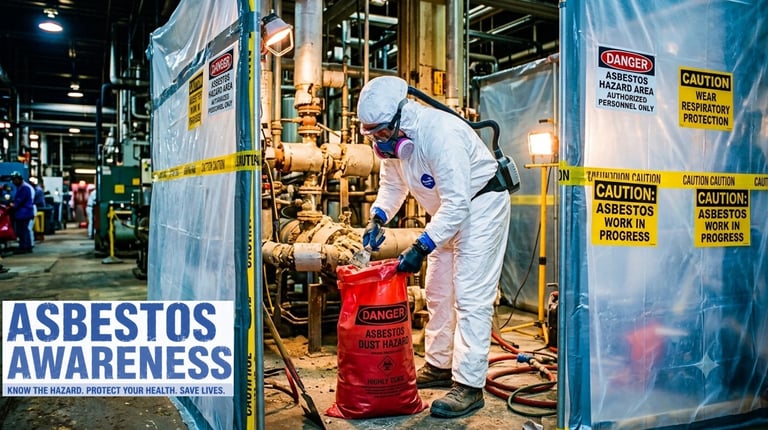
Industrial workers should always:
Identify asbestos-containing materials before starting work.
Never drill, cut, sand, grind, or break suspected asbestos materials.
Follow the Permit-to-Work (PTW) procedure where applicable.
Use approved methods for asbestos work.
Restrict access to asbestos work areas.
Keep materials wet during removal to reduce dust.
Use proper warning signs and barricades.
Dispose of asbestos waste in approved, labeled containers.
Wash hands and exposed skin after work.
Never use compressed air to clean asbestos dust.
Never dry sweep asbestos debris.
Personal Protective Equipment (PPE)
When asbestos work is authorized, workers should wear:
Approved respirator (P2, P3, or as specified by site procedures)
Disposable coveralls
Safety gloves
Safety goggles
Safety boots
Head protection where required
Contaminated PPE should be handled according to company procedures.
If You Suspect Asbestos
Immediately:
1. Stop work.
2. Do not disturb the material.
3. Isolate the area.
4. Inform your supervisor.
5. Report the suspected material to Safety Department.
6. Wait for inspection before resuming work.
Employer Responsibilities
Employers should:
Conduct asbestos surveys in older facilities.
Maintain an asbestos register where applicable.
Label asbestos-containing materials.
Provide worker awareness training.
Supply appropriate PPE.
Monitor airborne fiber levels when required.
Arrange medical surveillance for exposed workers.
Ensure safe removal by trained and authorized personnel.
Do's and Don'ts
Do
Report damaged insulation immediately.
Follow safe work procedures.
Wear the required PPE.
Attend asbestos awareness training.
Read warning signs before starting work.
Don't
Break or drill suspected asbestos materials.
Use compressed air for cleaning.
Dry sweep asbestos dust.
Take contaminated clothing home.
Ignore damaged insulation or warning labels.
Key Safety Message
You cannot see asbestos fibers with the naked eye, but they can permanently damage your lungs. Prevention is the only effective protection. If you suspect asbestos, stop work, report it immediately, and never disturb the material unless properly trained and authorized.
Conclusion
Asbestos remains a hidden hazard in many older industrial facilities. Awareness, proper identification, safe work practices, and the correct use of PPE are essential to preventing exposure. Every worker has a responsibility to recognize potential asbestos hazards and follow workplace safety procedures. By working safely today, we protect our health for the future.